Episode Transcript
[00:00:00] Speaker A: Wow.
[00:00:00] Speaker B: Thanks for sharing that, Joel.
[00:00:02] Speaker C: Yeah, no, but I. I'm right. I mean.
[00:00:06] Speaker A: No, no, no. That's interesting.
[00:00:07] Speaker C: Lisa's responsible for the adolescent humor here. I have nothing to do with it.
[00:00:11] Speaker B: Oh, I'm sorry.
[00:00:12] Speaker C: Lisa is absolutely, fully all in charge of the adolescent humor.
You are the most adolescent of adolescent humors. And you're not funny. You think so? And you're not funny. But. Wow, I'm so glad we had this time together.
[00:00:30] Speaker B: So you guys have been doing quite a lot of chatting with your.
The Wisdom Cafe, Right. It's been.
[00:00:37] Speaker A: Thanks to Joel. Yeah.
[00:00:39] Speaker B: Nice. Nice. That's good. I haven't had a chance to, like, really follow the threads, but it seems like it's been pretty fruitful.
[00:00:48] Speaker C: Well, you want. Do you want to initially just. Do you want to start the. The introduction to the podcast and introduce us and begin.
[00:00:54] Speaker B: I thought you're going to be the host.
[00:00:56] Speaker C: No, I'm the guest. It's always.
[00:00:58] Speaker B: No, you're the host.
[00:00:59] Speaker C: The guest. To know that the guest is the guest and the host is always the
[00:01:03] Speaker B: host, you need to be the host. You're a better host than I am. Well, we're kind of.
[00:01:08] Speaker A: Are we kind of sort of interviewing her in a sense?
[00:01:10] Speaker B: Wait, you're interviewing me?
[00:01:12] Speaker A: Not really, but we're giving you an
[00:01:14] Speaker B: interrogation, Lisa, that I'm used to, that I can handle.
[00:01:18] Speaker C: But we're.
[00:01:18] Speaker A: I mean, I'm. I'm more interested. We're more. We're focusing on your insights more.
[00:01:23] Speaker C: That's what the host has to figure out.
I know you're a big.
You're a big planner, Lisa, so you probably.
[00:01:33] Speaker B: Rich.
[00:01:34] Speaker C: What are we talking about? It's as certain as where you live in tomorrow.
[00:01:37] Speaker B: You should be the host. No, host.
[00:01:39] Speaker C: The topic is as certain as where you're living tomorrow, Lisa, which I'm not too sure about. So the.
[00:01:44] Speaker B: What.
[00:01:44] Speaker A: What.
[00:01:46] Speaker B: What did you say about me living tomorrow? Where am I living tomorrow?
[00:01:48] Speaker C: We don't know where you're living tomorrow. Yeah, where you're living.
[00:01:52] Speaker B: Yeah, I'm probably about to move again, actually, so. Yeah, that was part of my Akashic record experience today, so was trying to decide.
[00:02:02] Speaker A: I really want to hear.
[00:02:04] Speaker C: Lisa, if it's okay, why don't you just introduce it as. As host of the Labyrinth and Rich and I could be guests just because it's been such a while since we have you and you have the time. So let's do it that way.
[00:02:14] Speaker B: Yeah, I haven't done it in a long time, so.
[00:02:17] Speaker C: Well, okay. I'm happy to do that. Let's begin now.
[00:02:21] Speaker B: Hello.
[00:02:22] Speaker C: Hello. We have here the host of the Labyrinth, Lisa Carley, who's invited Rich Grego on Meme, Joel Lessees on for an episode of the Labyrinth. Take it away, Lisa.
[00:02:37] Speaker B: What are we talking about? We still didn't decide what we're talking about.
We're talking about what's on your mind.
[00:02:46] Speaker A: Seriously. I would love to talk about what's what. Your ex. What your insights and life and worldview and challenges and spiritual, you know, experiences have been like.
[00:02:58] Speaker B: Well, I think, like, the.
I'm also having a little bit of a hard time grounding. That's why I'm pushing back on Joel a little bit. But.
So, I don't know. I guess, like, for me, it's always this question of what. How do I utilize my time in such a way that is both meaningful in the present? Of course. Right. I want it to be meaningful in the present, but also in service of something like a bigger purpose that perhaps I can't discern. And I think that's the hard part right in the moment. I think I'm pretty good about, you know, this is where I need to be in this moment and be present with that. I feel like I'm okay with that, but what I feel is a struggle or something I'm still trying to develop in myself is like, what is this in service to?
And not as, like, an end goal. I don't mean it that way. I just mean that I want everything to be in alignment so that what I'm doing in the present is. Has some through line to this ultimate, like, purpose and calling.
And I think that's always been a, you know, a passion of mine and really wanting to be in alignment with that.
I think that that feels like a real through line of who I am as a person.
[00:04:20] Speaker A: Absolutely.
[00:04:21] Speaker B: And then I think so that that's the first part of the journey. Like, if you have a sense of what that calling is, how do you then reconcile the day to day?
Do you know what I mean by that?
[00:04:35] Speaker A: Absolutely. And that would make a great theme for discussion, wouldn't it?
Are you okay with that, or what's that?
[00:04:42] Speaker B: Are you okay with that or.
[00:04:44] Speaker A: Yeah, I am. I, you know, you and Joel, like, are the, you know, the. The masters. I just. I'm just here to. Because I'm a charming guy. And so I. I said,
[00:04:59] Speaker B: yeah, I mean, if we're okay to go in that direction, I guess that's what's up for me now.
And I certainly think.
I certainly think we can Weave in education, like, as a part of that.
Because I think that what are we educating kids for? Are we. Are we educating them to have purposeful and meaningful lives, or are we educating them to sort of perpetuate a Western, capitalist, you know, paradigm? So I do feel like, you know, I want to.
I guess I'm looking at myself right now in two parallel roles. One kind of the, you know, the. The. This bigger vision or through line.
Maybe it's a karmic through line. I'm. I'm not sure that I have the language for it, but. And also my current role as an educator.
And where do those intersect and where do I feel like some of the autonomy of how I would want to.
Moving oneself toward deeper meaning and purpose, how much that is either in alignment or in contradiction to the goals that are, you know, kind of set forth?
[00:06:08] Speaker C: So one of the things we. You wanted to introduce was the Akashic record, right? The general knowledge that the Akashic record exists is real. It's a compendium of all past, present, future events that can be accessible through spiritual means to help one in life.
[00:06:25] Speaker B: Yeah, you did a beautiful introduction to it. And I don't, like. I really don't know that much about it. So.
So my friend is just starting her practice reading the records after she's been working with someone, I think, for the past maybe at least a year.
And a lot of stuff came up that was very, very, very powerful.
So. So I. I guess something that came out of it, just generally speaking, is that it was a confirmation of things that I've already, you know, had some awareness of, which was good also, I think, helped to shift you.
I think if we have this sense of purpose and it becomes clear to us, it can become a guiding light. And when we're at crossroads, right, and we're trying to decide which direction should we go, Like, I'm trying to decide, do I stay here or do I move into, like, a completely different space?
That choice. Because if I move into a larger space, it means that I can start working in some of the ways that are meaningful for me. Like, I can start doing coaching. I can start, you know, kind of having a more artistic space. This is an artistic studio. Like, it's a converted warehouse, so. And it's turned into, like, an artist community. Basically, what I was feeling and what I was ascertaining from the reading and that sort of plots along other things that I delved into is this idea of needing to be in. Be like a center point of gathering information, like that's part of my role is to be kind of like a hub of gathering a lot of information from a lot of different people, and then to be synthesizing that information and being in a larger community space like that would allow me to do that.
So that's the specifics of my situation. But generally speaking, you know, I'm at this intersection of, oh, do I stay here? Do I move into this much larger space?
So I think that's where I'm at with it. Yeah, that's. That's what we're doing, right? Yeah, that's the purpose of the podcast is to kind of explore these things. So I guess I would throw back a question to both of you that, first of all, do you sit from the same place that I do that having a sense of direction in having, you know, not maybe an end point even, but having a sense of direction, does that help guide you or do you feel perfectly comfortable just kind of being in the moment and letting you know, things evolve and unfold?
[00:09:01] Speaker C: I've been on, you know, I've come from a very discordian, chaotic development, and developmentally was supremely, supremely discordian and chaotic, where the very element of discordian ism is that there is no inherent meaning. There is no meaning. Any meaning is actually a fabrication of. Of made up stuff that intrinsically in existence, there is no meaning in existence. This is all just absurd. That's the. The whole premise of discordianism is the absurd nature of reality with no meaning, no God, no purpose. And so I, whatever I have been given in my soul by the Dharma has allowed me to orient in some measure almost in a linear regression. If you guys are familiar with a linear regression, it's x1, y1, x2, y2.
[00:09:54] Speaker B: You know, I'm a math genius.
[00:09:57] Speaker C: I thought that was just a tech genius. Lisa.
[00:10:01] Speaker B: I'm a tech genius and a math genius. Hello. Thank you very much.
[00:10:05] Speaker C: Yeah. But the trajectory of my life has been a linear regression in relation to. To meaning in life, to meaning as a mode of service that as I've grown and assembled my own inner furniture and inner landscape, I begin to see that there is organization here.
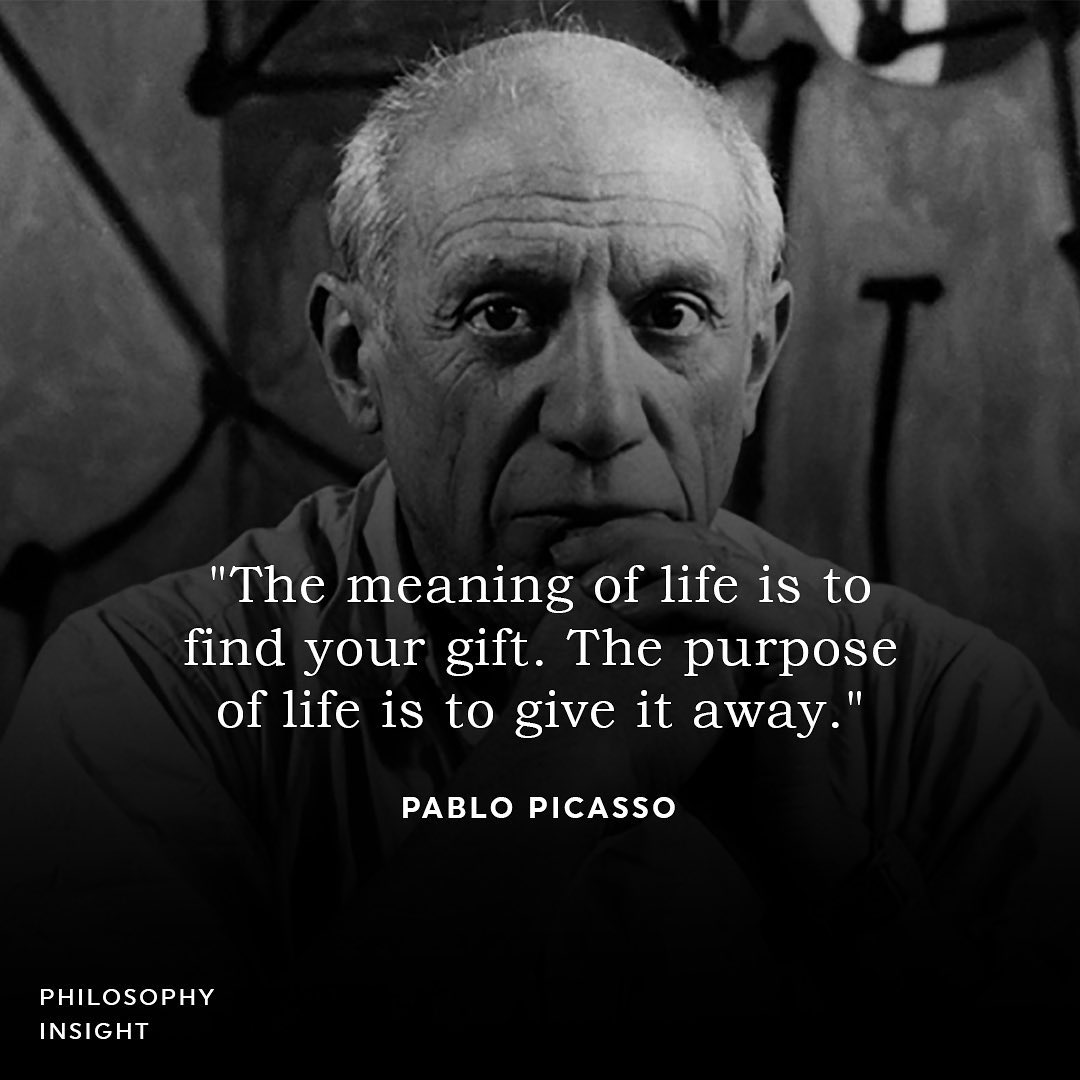
And the question becomes, who's responsible for organizing it? I am responsible for organizing my own life. No one can do it for me. No one's meant to do it for me. It's mine. It's given to me. This is my work. And so as I assemble the furniture and the inner landscape of myself, well, then I begin to uncover gifts and tendencies and hearts, loves and passions, which are pointers, roadmaps, signs to the mode of service called me to contribute to. And so I found mine very deeply. I'm resting in it and trying to facilitate it. Picasso says, the purpose of our life is define our mode of service. The meaning is to give it away.
[00:11:01] Speaker B: Right, Exactly.
[00:11:02] Speaker A: And you haven't.
[00:11:04] Speaker C: Are you.
[00:11:05] Speaker A: Are you there?
I mean, it sounds like Joel's there. Are you there yet, Lisa?
[00:11:11] Speaker B: No, but I think I'm.
I feel like I'm moving in the direction. And I think part of that, maybe this is unique to being a woman. I don't know. But, you know, I grew up with this narrative of, you know, my identity is strongly connected not only to just being in relationship, but who I'm in relationship with.
And I feel myself definitely shifting into a place of figuring out the terrain of who I am outside of relationship, outside of a primary relationship, like a romantic, you know, partner kind of relationship, and finding my identity in that, as opposed to kind of always looking for putting the energy into either finding a partnership or maintaining a partnership. And. And so I feel like I'm moving into this place of doing, like, a really deep dive within myself. And in doing that deep dive within myself, it feels like it's opening up more terrain than I thought was available.
And it feels like that is. I'm more in alignment. I feel more in alignment with this, you know, kind of service. Like, the call to service feels more clear. What that call to service is feels more clear. And. And I do feel that in my relationships that I have grown immensely, and they've helped me get to this place of being able to manage that terrain or even discover that terrain. And ideally, we're not any different, but I. Maybe for women, that might be more of a challenge. I don't know.
I think for myself, I have found that it is that I tend to be more people pleasing. I tend to be more, like, empathic toward what somebody else needs and less aware of my own needs. When I think about this trajectory that I'm on, suddenly has become more clear to me that I want to be in alignment with this larger purpose. I want the universe to kind of be my companion, I guess, and. And to be more centered in that awareness.
[00:13:18] Speaker A: Yeah, that's fascinating. You know, when you say that, you said that just both about you and about women in general, perhaps being more amenable to finding deep meaning and purpose via relationships than men are, just sort of relationally generally, it brought to mind that book. And it's funny, when we Were when we were. When I was a graduate student. Doctoral student. You were a student. I remember it was pretty popular and I just can't remember the author, but the name of the book was Beyond Buddhist Patriarchy or something.
It was by a Buddhist scholar who, who talked a lot about the thesis of the book was that Buddhism was a more sort of patriarchal in some ways religion than it's been given credit for being, but that it's been labeled as being and that it's not relational.
[00:14:10] Speaker B: You mean, what's that? Because it's non relational. It's about kind of breaking attachments. Is that it's.
[00:14:16] Speaker A: Yeah, yeah.
And, and, and she was saying that that's an interesting. If you look at, at so many of the great, what they call the great religions, right? The, the, the, the. The main established world's world religious traditions, so many of them are wealth, obviously patriarchal. And so many of them involve men who become leaders by leaving everything, be leaving their families, they leave their loved ones and that you need a more solitary path.
[00:14:43] Speaker B: Okay. So. Yeah, well, it's interesting because like just what you were talking about, Rich, with you know, this kind of solitary path and you know, that being the, you know, sort of the akin to a spiritual journey. That is what came up in the reading today was that in fact the. This journey of mine is supposed to be. This is supposed to be more solitary. I've heard that before in other readings that I've done. Not Akashic. This was the first time I did this type of reading, but certainly in other spaces. And I think the first time that I heard it, I also heard it when I was in India and had a pretty extensive astrology reading. But this now I think it's coming or when I heard it in India for the first time, it was kind of jarring because it seemed to be against the paradigm that I was comfortable with. But now hearing it today, it really landed and it made a lot of sense to me thinking about, you know, is it masculine or feminine or patriarchal or matriarchal? Like for me, I think it. We need to redefine relationship. We need to, we re. We need to redefine what it means to be in relationship. I don't look at Buddhism as like a patriarchal journey of one man who decided to leave it all behind, even though that's the actual, you know, lived experience that he had. I can kind of see where that's coming from because I think when we are in relationship, like an intense relationship, we're doing a lot of emotional labor in that relationship.
And there's and that is part of our work. I think that's definitely a part of the journey. But I feel that the, for me anyway, that it's shifting into a place of I want to be doing that emotional work as if the universe itself I'm in relationship with.
So what is it asking of me? I can find that to be just a beautiful space to, yes, to work through kind of the day to day things and, and the way that I need to grow psychologically and definitely spiritually too.
But I think maybe, maybe what I'm saying is that I don't think there's enough of a balance in our culture. I think there's an emphasis on being in relationship, but there isn't enough emphasis on it being okay to be alone and what that feels like and what that opens up for you, the avenues that are created for you when we do that.