Episode Transcript
[00:00:00] Speaker A: And I. And I came to that way of interpreting that phrase, to serve him very early in my life, to mean other than just simply obeying the rules of what Sister said in class in grammar school, you know, that it meant more than that. It didn't mean obeying the commandments and the rules of the church, and it didn't mean just that.
It might mean that at any given moment in my life, be what I made you to be.
[00:00:32] Speaker B: So I. I wanted to go back to what Bob was saying.
So in. In the context in which we're talking now, it means so much more or different than I thought about it as a child, but even as a young adult struggling with Catholicism.
So when I hear God created me to know him. To me, what I hear is to be him, to experience the dao, to experience the oneness, to love him, to experience the love, to serve him, to then bring beauty into the world.
So we're never going to understand why the world is created. I mean, more than materialistic physics. That's the how.
I don't believe that's the why. That's the how.
To me, poetically, the most my mind can get to right now is the why is what we're talking about.
[00:01:45] Speaker C: The.
[00:01:45] Speaker B: The why is love.
The nature of the universe is love.
The expression of love is creation.
The shaman say what Bob said.
Everything is relationship.
Love is relationship. It's expressed in relationship.
And, you know, ishkalama budhala got the ground of being.
We say shorthand, God is love and the beloved, no distinction.
You experience it paradoxically in the distinction to get back to the one and then you know it.
[00:02:34] Speaker A: So I would never have said this to the nun who taught me that catechism, partly because I didn't even know such things existed, and partly because she was a nun.
But that God made me to know him.
That's in the biblical sense of that verb, right? Which has come to take on sort of perverse thinking in. In its expression these days. But in fact, God. God made me to know him that intimately.
[00:03:12] Speaker D: Yeah, I would. I would use a little bit different language, Bob. I would say you're absolutely right, what you just said.
The spirit, everything is correct except for God doesn't want you to know him intimately.
God wants you to know you intimately.
Thereby you know yourself the depths. You realize you do not exist. Exist. You realize that you are a gift sustained by the One. He doesn't need you to know him. He needs you to know yourself for your. And it's for your own benefit, because once you Realize the conditions here and the causes and the mechanisms.
Mage, my creative writing professor, he said, if you only utter one prayer, and it was, thank you that that would be enough.
Because really we are just sustained by something which wants nothing of itself for itself. It only wants it only it can only in its own mechanisms give.
[00:04:14] Speaker C: Amen.
Can I say that we do exist, but not as an independent existence, that the I that I think I am usually, which is everything that appears to me has a dependent existence, has a temporary existence. All this but the I, Rama in a famous story asks Huniman, the great monkey character in Rama, here is God. How do you look on me? And echoing what.
What you're saying, Bob and Joel, and each of you is. He says, he gives three answers. He says, as the body, I'm your faithful servant.
When I know I'm a soul, I'm a spark of your eternal light.
The goodness that Joel is talking about, a friend with a capital F, as Sufism says.
And when I know the truth of what I am, you and I, my Lord, are the same.
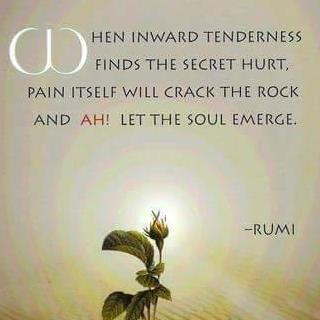
And I think that's like. That's Rumi's, like knocking from inside the door instead of outside. And he doesn't give one of those answers like he gives all three. They're different orders of reality. They're all three true.
And that third, knowing of what I am, this is Vedanta's, I think, emphasis is, isn't an experience, any experience. I hear you, Henry, talking about the value of a certain kind. I think maybe we're saying the same thing. But any experience comes and goes. And. And so there are no experiences of Brahman in the sense that everything is an experience of Brahman, because as Joel's saying, like, that's all that is, and everything else derives from it.
[00:05:50] Speaker D: We get into semantics here, but the Buddha said, or it was purported to say, or the spirit of what he experienced was that when under the morning star, when he awoke, all beings awoke with him. So what's that really saying like that he's really saying, like, outside of me, nothing exists.
[00:06:11] Speaker B: So, Joel, can you flip to number 18?
Because I took a peek when we were at 17.
When the great dao is forgotten, goodness and piety appear.
When the body's intelligence declines, cleverness and knowledge step forth.
When there is no peace in the family, filial piety begins. When the country falls into chaos, patriotism is born.
In the beginning, yeah, I'm gonna do the reverse. In the beginning, you got to start somewhere, so you might be patriotic, and then you you try to keep peace, you try to be very Confucian, I, I will serve my parents even if I don't love them.
And then real peace starts to come and then you start to get clever and then real intelligence appears and then you move towards goodness. But then everything disappears when you reach the dao and to pursue the paths that we're following individually and together.
So there's a teaching in Suvism, it's one of the symbolic activities that an icon brought.
And he was using an exam, this was the early 20th century and he was trying to give a teaching on the mind but using metaphors of agriculture and this is pre modern agriculture, so old fashioned horse and plows and things like that.
And there was a teaching that always struck, struck us that it was really hard to take in.
And he would say, you clear the entire field, you don't hold on to anything. The entire, the, the empty field is much more beneficial, I'm paraphrasing, powerful than anything you could possibly hold on to that you think is good.
So when it's time to plow the field, you get rid of everything.
What he was saying symbolically is.
[00:08:31] Speaker A: The.
[00:08:31] Speaker B: Mind, the Dao Brahman is so much more beautiful and powerful than anything your mental concept tells you you should hold on to.
And that is so hard to get to because I want to hold on to things. I can't let go of everything.
The teaching is let go.
You can't even imagine how beautiful that's going to be. And I can't and I don't think in a human life, even the perfected human being.
So Muhammad, Jesus, whoever you want to say, as long as you're human, sorry, I fully believe you're attached to something you can approximate more and more and more. And we have exemplars and yeah, there is a ladder.
So Buddha becomes enlightened and then he, he's asked to teach and he says, well, okay, but now you got to follow these rules.
But we hold on to the rules.
That is so hard. And the danger of not holding on to the rules is we get grandiose and think we can do whatever we want, we think we really love.
And then that becomes the excuse to do these horrible things and then we make another excuse. Well, that's your karma.
This is happening to you because I was meant to do this to you because we were mother and son in a past.
So there's a real, there's a real danger. But what I think we're experiencing now in our present, chaos, at least in the States, but in the world is holding on to the lower rungs of the ladder because we don't trust that teaching that no going up that ladder brings us to something. If we are sincere enough to know, we're never going to quite get there.
So that little bit of I think I'm doing it, but I know there's more and that's, I think, helps us be more careful and not get off on our high horse. We have to act, we're going to do something.
Doing nothing is doing something.
And we try to do it out of the best intention.
But if we keep on remembering there's more, I can always go deeper.
That's what I wish we could. We could teach.
[00:11:33] Speaker E: I wonder if a lot of what, what you're talking about. Well, what everybody's been talking about in a sense. Again, another unifying theme, I think, of the discussion maybe is raised it explicitly before this. The, the relationship of, of knowing.
Again, one of my, One of my. My. The guys I've done a lot of work on is Krishnamurti. I guess everybody's familiar with Krishnamurti, right?
Talk about simple, right? Such a simple direct message about what the path to God is. There is no truth. Is a pathless land is his favorite, which I think is a phrase that Lao Tzu would agree with.
The dao is a pathless land. Brahman is a pathless land, ultimately, at least when it's realized. And the problem is, I think when we want to know God, we create a dualism, don't we? We create some sort of a subject object distinction that perhaps prevents what we ultimately really want, which is being God, I guess, being the dao, whatever it is, being emptiness.
So that's a. And that to me seems like a, A, a really difficult paradox, right, that we're working with because all these paths are ways of knowing God or God's way of knowing himself. I mean, if you want, you want to, you know, draw some of these, draw upon some of these, these expressions that you hear mystical traditions use. So, so what's the. What, what's the way out of that?
And I suppose wanting a way out of it, wanting to know a way out of it is perpetuating it as well. But I mean, to me that's the, that's the ultimate quandary.
Do you guys follow me? And I know every path, right, that we've been talking about. And especially honestly, I mean, if I had to plant my flag in a tradition that I really identify with most intimately, maybe just because I'm as Spiritual traditions go. I'm most familiar to some extent with my scholarly work and stuff with the Neo Vedanta tradition. So, you know, I'm, I'm sure that. And I know, right, that that's a, that's one of their perennial questions. And, and certainly it is in Buddhism. Right.
And I'm obviously in the Sufi tradition from what you've said. Less so in an articulated form in the Christian, Judeo, Christian tradition perhaps, which is more comfortable, I think, with dualisms between God and, and, and, and, and, and, and man, all that kind of stuff. But I know I'm rambling and I know Brian, you have something to say, but I, I'm just curious. So our Henry, what is it? Or Jabol, honestly, this is my, this is my own spiritual malaise. So, so what, what. How do you, how do you break this intractable cycle? I guess is what I'm wondering.
[00:14:35] Speaker C: Yeah, my. Understand. This is beautiful.
My understanding, Richard, of the, the Gita's answer is twofold, that how do you get from.
How do you get from where you are to where you are?
Right.
[00:14:52] Speaker E: Yeah, yeah, yeah, yeah.
[00:14:53] Speaker C: Well, what is the obstacle? It's that, I don't know, something or I, I think something that isn't true. Ignorance. Yeah. And, and, and on one level, action is compatible with ignorance. So, so there's no action that can get me there. But on another level, Henry talks about the field and the Gita begins, it opens with kurukshetra Dharmashetra on the field of action, or the field of puru on the field of Dharma. It's a field of ethics. Yeah. And so the second answer is, what you've been talking about is through right. Action.
Because God manifesting in the world manifests. The closest thing we can get to unmanifest. Brahman is, is, is manifest iswara satva, that purity, goodness. So the degree that I can abide in goodness, I get as close as I can as a seemingly manifest thing. And so the Gita says, act, perform your duty without attachment. Karma Yoga and that this, this Karma. And over and over again the Gita says the answer is knowledge. Arjuna says, I don't get it. And, and Krishna says so then do Karma Yoga and you will get. And I think that's what with, with due respect to brilliant and, and maybe enlightened Neo Vedanta teachers, I think where they leave a lot of students hanging is that, is, is that absence of Karma Yoga. That's what I love about classical Vedanta. And agreeing with you, Henry, like to anybody who is listening? Like, there's some of this, like, don't try this at home with love and do what you will. Because almost everything we think is love is, is dualistic love. It's really desire wrapped in some higher ideal. And we're going to hurt people. And better to. Yeah.
[00:16:36] Speaker D: Is there another, another dao that we want to examine as we wind down?
Is there a number that we want to call forth?
[00:16:46] Speaker B: Well, we started with one, so why don't we end with 81?
[00:16:50] Speaker D: Okay, so 81 Dow 81.
True words aren't eloquent.
Eloquent words aren't true.
Wise men do not need to prove their point.
Men who need to prove their point are not wise.
The master has no possessions.
The more he does for others, the happier he is.
The more he gives to others, the wealthier he is.
The dao nurses not by forcing, not by dominating. The master leads.
[00:17:30] Speaker E: Brian just said, is a perfect segue to that, to that, to that. Concluding to me, it seems like, Right.
[00:17:36] Speaker D: I mean, yeah, I want to dovetail that 81 dao with this by the 14th century Japanese Zen practitioner Ikkyu, who says, every day, priests minutely examine the Dharma and endlessly chant complicated sutras.
Before doing that, though, they should learn how to read the love letters sent by the wind and rain, snow and moon.
I guess just in wrapping up, could we have some final reflections about. What was this for you like, Rich? Do you want to throw rotten tomatoes at Henry or make them cut onions? What's going on?
[00:18:28] Speaker E: No, as always, I really mean it. These are my favorite. Whenever I get together with these and these podcasts, with any of, any of our discussions, Joel, but with these guys in particular, I think this least the second or third time I've been in session, they're, they're, I, I love them because they're like spiritual therapy sessions for me. So I have no complaints. I really mean it. And that to me is the most important, the most important activity, intellectual or otherwise, that I can engage in. So I, gosh, I, I, I don't know. How do you sum up that? If we were trying to sum up the daing, this last, this last verse that, that you quoted from, from a Zen master, every day, minutely examining the Dharma and endlessly chanting complicated sutures. But before doing that, I, I love that verse. They should learn how to read the love letters sent by the wind and the rain and the snow and the moon. They should.
Maybe, as you know, the, the Book of John would say, they would realize that they would, would be the love of God first and then all those chant, all the chanting they did and all the sutras they recited would be not paths to. To try to get to. To God or get to the Dao. They would be expression, living expressions of God and the Dao through them.
So that's my, that's my takeaway anyway.
[00:19:58] Speaker C: Yeah. Omtad Sat.
Thank you to the Dao and about each of you, you know. Thank you Bob.
[00:20:05] Speaker D: What are your final reflections today?
[00:20:07] Speaker A: I have always held the Dao to.
[00:20:12] Speaker B: Be.
[00:20:14] Speaker A: Ominously beyond me.
It's something I would only go to with a knowledgeable teacher.
And I'm not denigrating knowledgeable teachers. But my experience today is don't be afraid.
[00:20:31] Speaker B: Weighed in.
[00:20:32] Speaker D: Oh, I love that. Yeah. Because you are. You are the Dao. The, the Dao includes you. You are not separate from the Dao. It's just our, our paradigm, our phenomenology just is vals us from the reality that we are the Dao living embodiment. And the Dao is good. So we are free to choose any direction. But when we accord with what is ethical, true, kind, then we accord deeply with the Dao and then we become in harmony with the Dao. And then the Dao is not separate from oneself.
I just want to thank each of you. Bob and Brian, Rich and Henry, my co host.
I wanted to end with a last ikiu poem who's 14th century and it's called Raincoat and Straw Hat. And it goes like this.
Woodcutters and fishermen know just how to use things.
What would they do with fancy chairs and meditation platforms in straw sandals and with a bamboo staff I roam the 3000 worlds dwelling by the water, Feasting on the air year after year.